


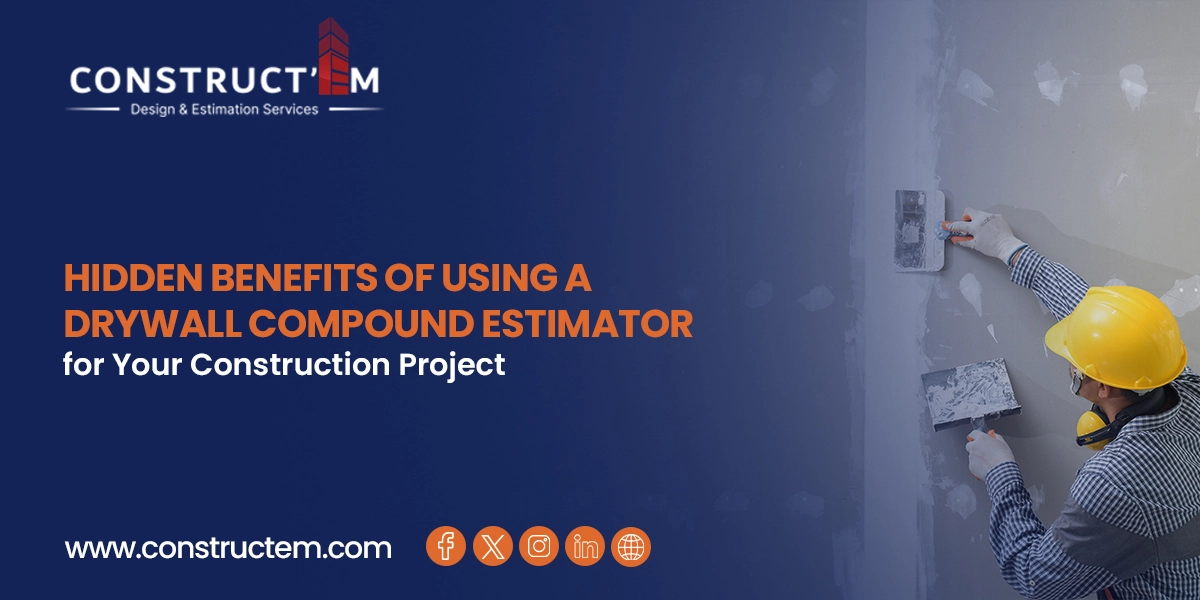
“Every inch of miscalculated drywall compound is money literally flying out of your pocket.”
Wasted materials, budget overruns, and unexpected delays are all too common on construction sites. Even a small miscalculation in compound usage or labor hours can derail your project timeline and inflate costs significantly.
This is where a drywall compound estimator becomes a game-changer. It helps contractors, builders, and painters plan more accurately, save time, and avoid unnecessary expenses. Accurate drywall cost estimation is no longer just a nice-to-have but an essential for any professional construction project.
A drywall compound estimator is a tool that calculates how much drywall compound you’ll need for a project. By entering simple inputs like wall dimensions, drywall type, and the number of compound coats, the estimator provides a precise quantity of materials required.
Unlike manual calculations, which can be time-consuming and prone to mistakes, estimators give you reliable numbers quickly. This makes project planning easier, reduces waste, and ensures that your team can focus on actual construction rather than endless math.
For builders, painters, and contractors, this small step in planning can prevent large headaches later on.
Meet Your New Best Friend on the Job Site: The Drywall Estimator (TOFU)
A drywall compound estimator is a tool that tells you exactly how much compound your project requires. Simply input:
The estimator calculates precise material needs in minutes, eliminating manual math and reducing errors. Contractors and builders can now plan budgets, order the right amount of materials, and schedule labor without guesswork.
With tools like a drywall compound estimator, you can streamline project planning, reduce waste, and save hours on calculations—making your workflow smoother and more predictable.
Precise, automated calculations ensure you only order what’s necessary. This minimizes excess, saves money, and reduces environmental impact. With accurate estimates, leftovers and site clutter become a thing of the past.
Digital estimators can cut material takeoff time by up to 80%. Contractors can generate more bids per day and focus on core building tasks, rather than crunching numbers manually. This keeps projects moving and teams productive.
By considering all project details including often-overlooked materials, estimators prevent last-minute surprises. Contractors often pair drywall tools with broader budgeting resources like How a Commercial Building Replacement Cost Estimator Saves Thousand when planning total construction costs on larger projects.
Detailed, accurate estimates impress clients and build credibility. Showing professional material lists and costs improves reputation and encourages repeat business.
Knowing exactly what materials are needed allows for realistic timelines. Projects stay on schedule because delays from waiting on supplies are minimized.
Estimators act as a diagnostic tool, spotting potential problems before they occur. Contractors can manage project risks proactively and avoid costly setbacks.
Automated material lists make supplier communication fast and clear. Orders are accurate, reducing errors and ensuring your team always has what it needs.
Estimators aren’t just theoretical, they make a real difference:
For example, miscalculating compound for 10 rooms could delay a renovation by days. With an estimator, every room is calculated accurately, preventing costly interruptions and keeping the project on schedule.
Using a drywall compound estimator can save you money in multiple ways. By ordering only the materials you actually need, you reduce waste and avoid buying extra compound or tape. Fewer mistakes also mean less rework, saving labor hours and keeping projects on schedule.
Here’s a simple comparison between manual calculations and using an estimator:
| Item | Manual Calculation | Using Drywall Estimator | Savings |
| Compound & Tape | 100 lbs. (overestimated) | 85 lbs. (accurate) | 15% |
| Labor Hours | 8 hours | 2 hours | 75% |
| Supplier Trips | 2 trips | 0 trips | 100% |
| Cost Overruns | Possible | Minimal | Significant |
This table shows how much time, effort, and money contractors can save by using a drywall compound estimator.
Not all tools are equal. When picking an estimator, look for:
These features make the estimator a reliable part of your workflow. Companies like ConstructEm provide drywall compound estimator that meets all these requirements, helping contractors, builders, and painters streamline projects and avoid mistakes.
Even the best tool works best with correct usage:
Following these steps ensures contractors and builders maximize efficiency, reduce waste, and improve project outcomes.
A drywall compound estimator may seem like a small tool, but it has a big impact. It helps you save time, reduce waste, plan more accurately, and avoid budget surprises.
Contractors and builders who integrate drywall compound estimator gain a competitive edge. Accurate drywall cost estimation lets you plan smarter, bid better, and complete projects on time without stress.
Take the guesswork out of your next project. Contact ConstructEm’s estimator today and see how much time, money, and effort you can save.
Charge based on square footage or per room, including labor, materials, and complexity. Use accurate estimates with tools like ConstructEm for precise quotes.
Measure wall/ceiling area, account for joints, doors, windows, and coats. Input details into a drywall compound estimator for accurate calculations.
Costs vary by project size and complexity. Estimators help calculate material and labor costs accurately, ensuring no surprises.
Base quotes on square footage, number of coats, and labor time. Use drywall estimators to provide professional, detailed estimates for clients.
Typically around 80–100 lbs., depending on coats and wall condition. Use a drywall compound estimator for precise, project-specific numbers.
All-purpose or lightweight joint compound works best. Estimators can factor in type, coat number, and wall conditions for accurate material needs.





Social Links
© Construct'EM - 2026. All rights reserved.