

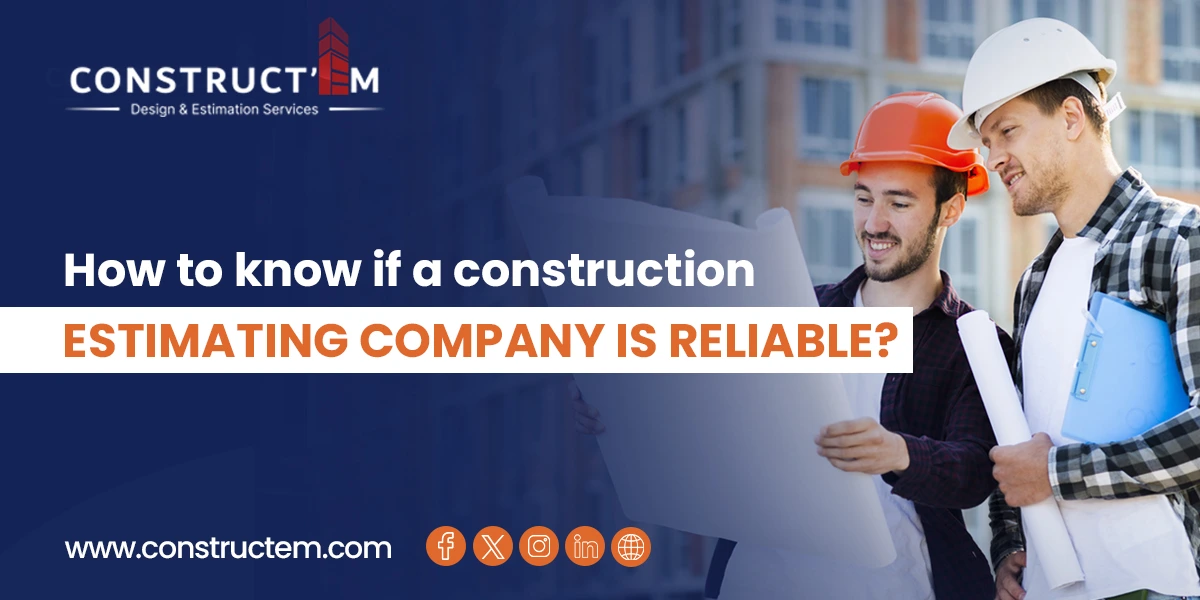
When you’re about to build or renovate a home, choosing the right partner to estimate your costs isn’t optional; it’s critical. In fact, studies show that up to 90% of construction projects go over budget, with many overruns averaging more than 28 %. That means one wrong estimate can lead to delays, surprise expenses, and major headaches.
So, when you look for a reliable construction estimating company, you’re really looking to avoid the pain points of budget blowouts, unclear timelines, and unexpected costs.
Let’s break down exactly how you can spot a trustworthy partner and make sure your next project starts on the right foot.
A construction estimating company takes your plans, specs, drawings, and materials list and turns them into a detailed cost prediction. For residential projects in the USA, such a company will look at: materials (lumber, drywall, roofing, etc.), labor (framing, electrical, plumbing), subcontractor costs, permits, overheads, contingencies, and sometimes escalation allowances.
According to industry data, the global Residential construction estimating services market was valued at about US $4.5 billion in 2023 and is projected to reach around US $10.2 billion by 2033.
In short, this service is essential for anyone wanting clarity and control before breaking ground.
Picking an unreliable estimating company can cost you big. If the estimate is too low, you may face budget overruns, delays, unhappy homeowners, or clients. If it’s too high, you may lose bids or opportunities. So, choosing a partner who cuts corners or lacks experience can lead to inaccurate estimates, which ripple into every phase of your project.
Here are key indicators to watch for:
When you’re managing a build, you might wonder: should you hire an in-house estimator or outsource to a specialist firm?
For many residential builders in the U.S., outsourcing to a dedicated estimating service is cost-effective, especially during busy times or when specialized take-offs are required.
Technology is changing how estimating companies operate. From digital take-offs to cloud-based collaboration, to integrating BIM (Building Information Modelling) for cost planning—these tools make estimates faster and more accurate.
On the software front, the growth in the U.S. estimating software sector (CAGR ~8.2% from 2025 to 2030) underscores how tech-enabled estimating is becoming the norm.
When evaluating a company, ask:
By understanding these myths, you’ll be more prepared to pick a company that genuinely adds value.
Before you commit, ask these of any construction estimating partner:
These questions will help you compare firms and decide if their approach aligns with your needs.
Looking ahead, several trends are shaping how estimating services evolve:
For a builder or homeowner, choosing an estimating company that keeps pace with these trends means you’re better prepared for what’s coming and less likely to be caught off‑guard.
Know more about What Happens If You Skip Hiring an Estimator on Miami Projects
Finding a reliable construction estimating company is about more than picking a name off a list; it’s about partnering with someone who brings transparency, expertise, technology, and local market knowledge to your project.
At Constructem, we’re committed to helping you start your residential build in the USA with clarity and confidence.
Before you break ground, make sure your estimator lays a firm foundation for your budget and timeline.
There’s no single “best.” Choose a company with strong residential experience, verified references, transparent processes, and a proven track record in your region.
Look for experience, licensing, insurance, portfolio, client reviews, communication quality, and cost transparency. Ensure they understand your project type and local regulations.
Rates vary by trade and location. For residential work in the U.S., typical hourly rates range from $50 to $150, depending on expertise and region.
Use local material and labor costs per square foot, add 10–20% contingency, and update estimates regularly as project conditions or prices change.
Professional estimators using current regional data and technology typically achieve estimates within 5–10% of actual costs. Accuracy decreases without proper expertise or tools.
The average hourly rate is about $43, translating to roughly $77,000 annually, varying by experience, location, and project complexity.
Top residential estimators combine regional expertise, transparency, modern tools, and proven track records. Firms like Constructem are widely trusted for accurate U.S. estimates.
Popular U.S. software for small builders includes Plan Swift, STACK, ProEst, and Bluebeam Revu, offering digital takeoffs, accurate cost tracking, and streamlined estimates.


Social Links
© Construct'EM - 2026. All rights reserved.