


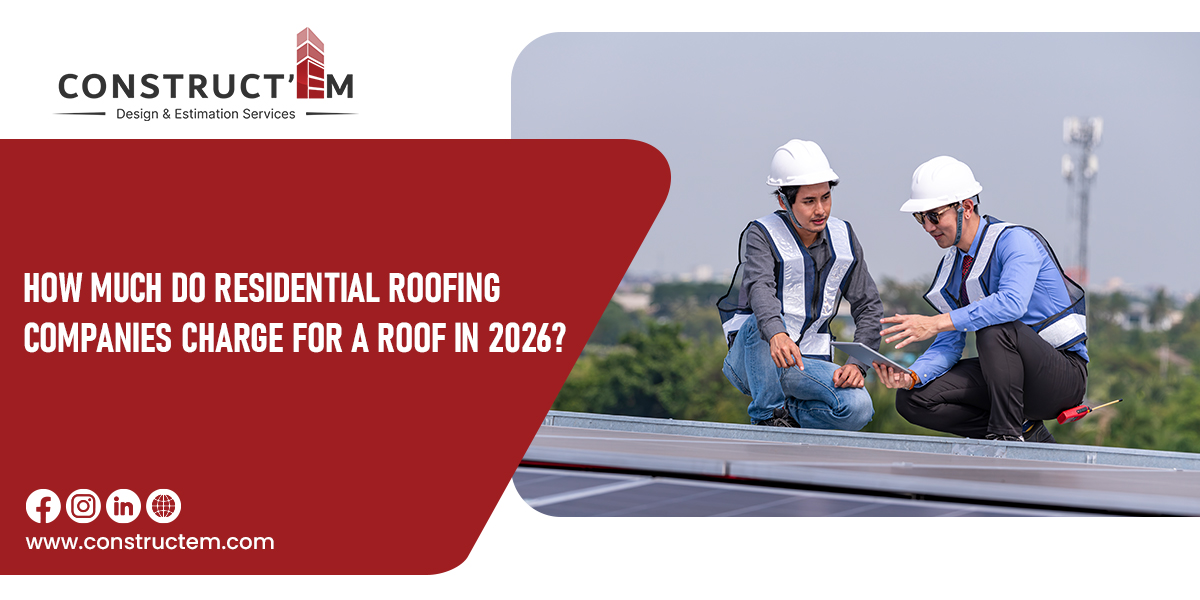
Residential roofing companies typically charge between $8,000 and $25,000 for a standard home in 2026. This wide range occurs because every project involves unique variables such as material quality, roof pitch, and local labor rates. Homeowners should expect to pay approximately $4.50 to $11.00 per square foot for most asphalt shingle installations.
Moreover, if you choose premium options like metal or tile, your investment can exceed $30,000. Because roofing is a critical structural component, understanding the breakdown of these costs is essential for any property owner. Consequently, accurate budgeting ensures that you secure a high-quality installation without unexpected financial strain.
Historical pricing models for home improvement no longer apply to the current economic landscape. Inflation and supply chain shifts have significantly altered the baseline for residential roofing companies. According to the Bureau of Labor Statistics, prices for asphalt and tar roofing products have risen more than 58% since 2019.
Furthermore, new environmental regulations often require specific underlayments that increase the total project cost. Due to these fluctuations, older quotes no longer reflect current pricing. You must rely on current market data to make accurate budgeting decisions.
Currently, most homeowners pay an average of $11,500 for a full roof replacement on a mid-sized home. While some smaller projects start at $7,000, large-scale residential roofing companies often see bids reaching $45,000 for luxury materials.
Home Size (Sq. Ft.) | Estimated Cost Range (Standard Shingles) |
1,200 | $6,000 – $9,500 |
1,800 | $8,500 – $14,000 |
2,500 | $12,000 – $22,000 |
3,500+ | $25,000+ |
As shown above, the scale of your home is the primary driver of the final bill. Additionally, the complexity of your roof’s design, such as multiple gables or steep slopes, adds to the total. Therefore, you should always request a detailed breakdown from your contractor.
Contractors use a “square” as their primary unit of measurement, which equals 100 square feet of roof surface. In 2026, the installed cost per square meter ranges from $450 to $1,100 for asphalt. This figure includes both the physical shingles and the labor required to secure them.
However, complex installations that require extra safety equipment will push these rates higher. If your roof has a steep pitch (above a 6/12 slope), expect to pay a 15% to 25% surcharge for labor difficulty.
Your material choice is the most significant variable in your total project cost. The table below compares current market rates and the expected lifespan for the most popular roofing options in 2026.
Roofing Material | Cost Per Square Foot (Installed) | Average Lifespan | Best Use Case |
Standard Asphalt | $4.50 – $9.50 | 20 – 25 Years | Budget-friendly residential builds |
Architectural Shingles | $6.00 – $11.00 | 30 Years | Enhanced curb appeal and durability |
Standing Seam Metal | $12.00 – $19.00 | 50 – 75 Years | Long-term value and energy efficiency |
Clay or Concrete Tile | $14.00 – $26.00 | 50+ Years | Mediterranean or Spanish-style homes |
Natural Slate | $25.00 – $45.00 | 100+ Years | Luxury properties and historical sites |
In addition, labor now accounts for roughly 60% to 70% of the total invoice from residential roofing companies. In 2026, skilled roofers earn between $45 and $90 per hour depending on their geographic location. Roofing is a critical structural component. Therefore, property owners must understand how these costs are structured.
Furthermore, insurance premiums for roofing contractors have reached record highs. Companies pass these overhead costs directly to the consumer to ensure the company remains bonded and insured. Consequently, a “cheap” labor quote often indicates a lack of proper insurance or experience, which puts your property at risk.
However, visible shingles represent only a portion of your total investment. Many homeowners encounter surprise expenses once the demolition phase begins. You must prepare for these potential additions to your initial estimate.
A professional estimate is a comprehensive document that goes far beyond a single total price. Most companies structure their quotes by separating material, labor, disposal, and overhead. This level of transparency enables accurate cost comparison and prevents pricing discrepancies across contractors.
Moreover, a reputable company like Constructem provides clear line items for underlayment, drip edges, and ventilation. If an estimate lacks these details, it is difficult to verify if the contractor is using high-quality components. Therefore, always insist on a written scope of work that includes brand names and specific material grades.
You can achieve a durable installation while staying within a reasonable budget. Strategic planning allows you to lower expenses without sacrificing the structural integrity of your home.
For large-scale projects or complex renovations, using Home construction estimating services is a vital step. These services provide an objective third-party analysis of your project costs before you even talk to a contractor. By utilizing professional software and current market data, an estimator ensures your budget is realistic.
Furthermore, an accurate estimate prevents “scope creep” and helps you negotiate from a position of knowledge. Constructem specializes in providing these detailed assessments to help homeowners and contractors stay aligned. Because accuracy is the foundation of any successful build, professional estimating remains a top priority in 2026.
Budgeting for a new roof in 2026 requires a balance of current market research and long-term planning. While prices have increased, the technology and durability of modern materials have also improved. By understanding the factors that drive costs from labor rates to material choices, you can make an informed decision for your home.
You can visit our social media on Facebook and Instagram for more updates on construction trends. For professional guidance on your next project, visit the experts at Constructem.
Homeowners need between $8,500 and $14,000 to install an asphalt shingle roof on their 1800 square foot home. Homeowners need to pay extra costs when they select premium materials and their roof design needs special work.
Homeowners can find their most economical roofing options during winter and early spring because the market experiences decreased demand. Many residential roofing companies offer discounts during these months to keep their crews busy, though weather delays may extend the project timeline.
Labor is the most expensive component, often making up 60% of the total cost. Among materials, the actual shingles or tiles represent the largest expense, followed by structural repairs like replacing rotted roof decking or plywood.
For a 1200 sq ft roof, you should expect to spend between $6,000 and $9,500 for a professional installation. This price includes the removal of the old shingles, new underlayment, high-quality asphalt shingles, and a standard workmanship warranty.
The average lifespan depends heavily on the material. Asphalt shingles usually last 20 to 30 years, while metal roofs can last 50 to 70 years. Premium materials like clay tile or natural slate can protect a home for over 100 years.
A 500 square foot roof is equivalent to 5 “squares.” Since there are usually 3 bundles per square, you will need approximately 15 bundles. However, you should always buy 10% extra to account for waste and cutting during installation.
The average cost ranges from $4.50 to $11.00 per square foot for a complete replacement. This rate includes labor, the disposal of old materials, and the installation of new shingles, flashing, and ventilation components.
Most homeowners spend between $8,000 and $25,000 for a complete roof replacement in 2026. Factors such as the square footage of the roof, the steepness of the pitch, and your choice of roofing material determine the final price.
The 25% rule is a common building code requirement which states that if more than 25% of a roof is damaged the entire roof must be replaced. This process ensures the home maintains its structural integrity while meeting current safety regulations.
Standard architectural shingles have a life expectancy of 25 to 30 years. The roof needs inspection because extreme heat and heavy snow and frequent hail can decrease its operational lifespan.
No roof is completely immune to leaks, but standing seam metal roofs are among the most resistant. Because they have fewer seams and hidden fasteners, they provide superior protection against water penetration compared to traditional shingle or tile systems.


Social Links
days day
hours hour
minutes minute
seconds second
Lock in Flat 30% off before your quote reservation expires.
Precision material takeoffs & cost estimates delivered fast for USA Contractors.