


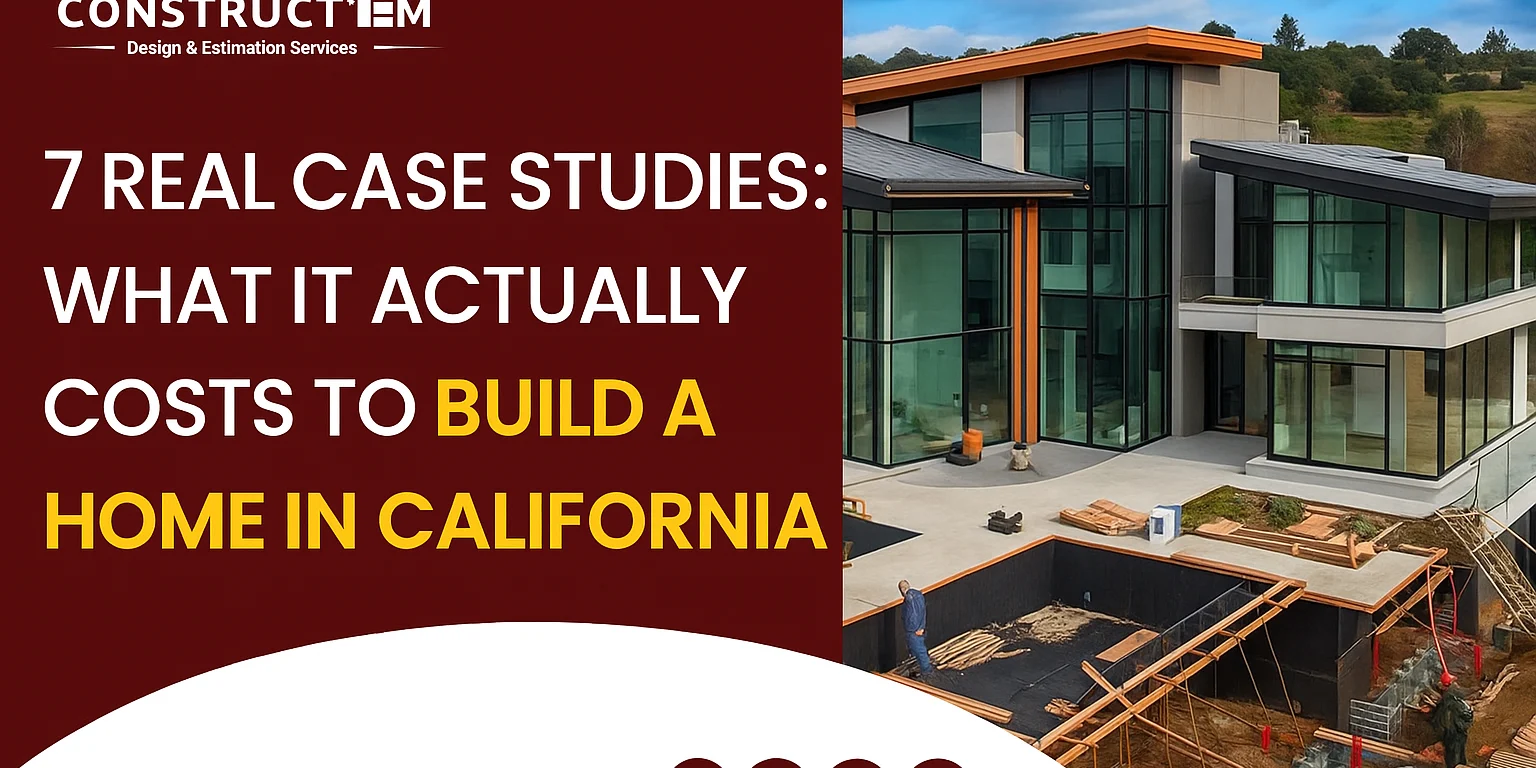
Building a home in California is exciting, but it can also feel like a financial puzzle. When calculating the costs to build a home in California, prices can vary widely depending on where you build, the materials you choose, and the type of home you want.
On average, building a home can cost anywhere from $200 to $800 per square foot.
To make this real, we’ve gathered seven case studies of actual projects in California. Each one shows the challenges the homeowners faced, how they handled them, and the final result. This will give you a clear idea of what it might cost for your own home.
A couple wanted a 3,500 sq. ft. eco-friendly home in Napa Valley with sustainable features like rammed earth walls and energy-efficient systems.
They hired contractors experienced in eco-friendly construction and used high-quality materials. The home cost around $2.1 million ($600/sq ft.), was completed on time, and is very energy-efficient. Even though the upfront cost was high, the couple expects to save a lot on energy bills in the long run.
A family needed a 2,200 sq. ft. home that was comfortable but didn’t break the bank.
The family used standard materials and finishes and hired local contractors to save money. The project cost about $880,000 ($400/sq ft.), was finished on time, and gave them a functional, comfortable home without compromising on quality.
A developer built a 50-unit apartment complex in Fresno to provide affordable housing.
The developer carefully planned materials and suppliers to keep costs reasonable. The project cost $21.5 million ($430,000 per unit) and was completed successfully, offering safe, quality housing for residents.
These examples clearly show how the costs to build a home in California differ between cities like Fresno, Sacramento, and Napa based on labor, materials, and regulations.
A 3,000 sq. ft. home in Malibu was destroyed in the 2020 wildfire. The homeowner wanted a fire-resistant house.
By hiring specialists and using flame-retardant materials, the home was rebuilt for $3.8 million ($1,267/sq ft.). Now it’s highly resistant to wildfire damage, and the owner benefits from lower insurance premiums due to the safer design.
A 2,000 sq. ft. modular home was planned for faster construction at a lower cost.
Challenges:
The homeowners hired extra contractors to finish the customizations. The project cost around $460,000 but is still incomplete, showing that modular homes can save money but may also come with unexpected risks.
An Oakland homeowner built a 500 sq. ft. ADU to rent out and earn extra income.
By hiring contractors familiar with ADUs and selecting materials carefully, the project cost $318,750 ($637/sq ft.). The ADU is modern and functional, with an estimated ROI of 62%, making it a smart investment.
Know more about the Ultimate Guide to Calculating the Cost to Build a Luxury House
A family wanted a 2,500 sq. ft. home in Los Angeles with high-end finishes.
Challenges:
Skilled contractors and quality materials helped complete the home for $1.25 million ($500/sq ft.). It was finished with modern features, and despite the high cost, it’s a strong long-term investment since LA construction costs have risen 44% over five years.
The costs to build a home in California typically range between $200 and $800 per square foot, depending on location, size, and materials. Lower-cost areas like Sacramento may be at the lower end, while high-demand areas like Los Angeles and San Francisco are at the top.
Modular homes are often marketed as a cheaper, faster alternative to traditional builds. They can save time and sometimes cost, but customization is limited, and delays or errors from the manufacturer can increase expenses.
You can save money by choosing standard materials, simplifying the design, selecting a less expensive location, and hiring local contractors. Proper planning, comparing bids, and understanding fees or permits in your area also helps avoid unexpected costs.
Yes. Accessory Dwelling Units can be a smart investment, especially in high-demand areas. In Oakland, ADUs have shown an average return on investment of 62%. They add rental income potential while increasing property value, though upfront costs can be high due to demolition, permits, and city regulations.
Costs are high because of expensive labor, high material costs, strict building codes, and impact fees. Both cities also have limited space, making construction more complex. These factors contribute to a significant price difference compared to other California regions.



Social Links
© Construct'EM - 2026. All rights reserved.