

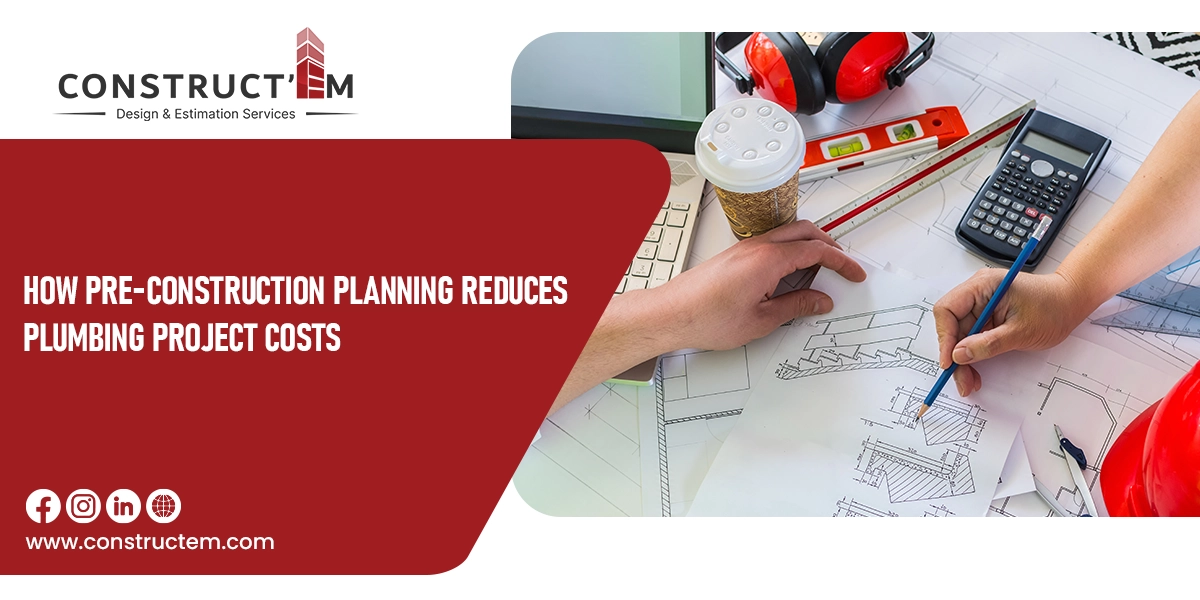
In the fast-paced world of commercial development, the plumbing scope is often where budgets begin to break down. Between the rollercoaster of material costs and the complexities of skilled labor, a single miscalculation on a blueprint can trigger a financial cost run. This is exactly why savvy contractors are shifting toward professional plumbing estimating services to lock in their margins long before the first shovel hits the dirt. By integrating precise data into the design phase, firms transform their pre-construction workflow from a “best guess” into a significant competitive advantage.
Most plumbing projects don’t actually fail during the installation phase but fail weeks earlier during the bidding process. Inaccurate material counts and a lack of site-specific data often lead to what we call change order fatigue. When a contractor relies on rough assumptions rather than a detailed pre-construction cost analysis, they inevitably overlook specialized venting requirements or unique drainage challenges specific to the site.
Furthermore, the price volatility of raw materials like copper and PVC can eat through a profit margin in days. Without a professional cushion or real-time pricing data built into the bid, even the most efficient field crew cannot fully recover a project built on inaccurate cost gusses.
Let our expert estimators deliver fast, accurate bids for you.
Get up to 30% Off your first quote
Utilizing pre-construction cost analysis services allows project stakeholders to see the cost structure of a build while there is still time to make changes. This phase is about more than just tallying up sinks and toilets; it’s about spotting the bottlenecks in the design before they become physical obstacles.
| Project Metric | Without Early Planning | With Professional Analysis |
| Material Waste | 10–15% (Average) | 2–4% (Optimized) |
| Change Orders | Frequent & Reactive | Minimal & Controlled |
| Labor Allocation | Last-minute scrambling | Proactive & Scheduled |
Precision is the only real bridge between a winning bid and a profitable project. Professional plumbing takeoff services use high-end software to pull every linear foot of pipe and every single coupling directly from your digital blueprints.
By moving away from manual takeoffs methods, contractors eliminate the human error that leads to shortfalls. These services deliver a comprehensive Bill of Materials (BOM) that acts as a definitive roadmap for your procurement team. When your buyers know exactly what’s needed, they can leverage bulk rates and ensure just-in-time delivery, cutting down on expensive on-site storage and theft risks.
The modern construction landscape moves way too fast for old-school pen-and-paper methods. Bringing in construction estimating consultant services provides a fresh, objective pair of eyes on your project’s feasibility.
These consultants offer niche expertise that a general estimator might miss. For example, a specialist knows the exact labor-hour difference between installing PEX versus copper in a multi-family high-rise or the nuances of local greywater codes.
There is always a temptation to “just get to work” to save on initial overhead. However, data from the Construction Industry Institute consistently shows that every dollar spent during the pre-construction phase can save five dollars during the actual build.
Skipping these steps leads to reactive construction, where problems are solved with expensive, late-stage corrective work. A lack of professional takeoffs results in wasted man-hours and frayed relationships with developers. Ultimately, the fee for a professional estimator is a tiny fraction of the cost of a project that runs off the rails.
Know more about Top 10 Plumbing Estimates Mistakes to Avoid in 2026
Handling the hurdles of modern plumbing requires technical know-how and serious financial foresight. By utilizing plumbing takeoff services and comprehensive plumbing estimating services, contractors can bid with total confidence and execute with surgical precision. Strategic planning creates predictable project outcomes.
For more on streamlining your pre-con workflow, explore our social platforms.
To estimate accurately, you must calculate the total fixture count, perform a detailed pipe takeoff, and apply current local labor rates and material costs.
Costs are best reduced through early value engineering, precise material takeoffs to eliminate waste, and using consultants to catch design inefficiencies before they hit the field.
Plumbing systems are integrated through coordinated routing paths within walls, floors, ceilings, and service chases, requiring close collaboration between MEP and structural teams.
The top five KPIs are Labor Productivity, Safety/Incident Rates, Profit Margin Variance, Quality/Rework Costs, and the Schedule Performance Index (SPI) for tracking time.
Generally, pre-construction services cost between 1% and 3% of the total project budget, depending on the complexity of the systems and the level of detail required.
Planning ensures budget certainty, slashes the number of costly change orders, optimizes your labor schedule, and confirms code compliance before work even begins.
Never cut corners on “behind-the-wall” infrastructure like plumbing, electrical, and insulation, as these are the most difficult and expensive systems to fix later.




Social Links
days day
hours hour
minutes minute
seconds second
Lock in Flat 30% off before your quote reservation expires.
Precision material takeoffs & cost estimates delivered fast for USA Contractors.