

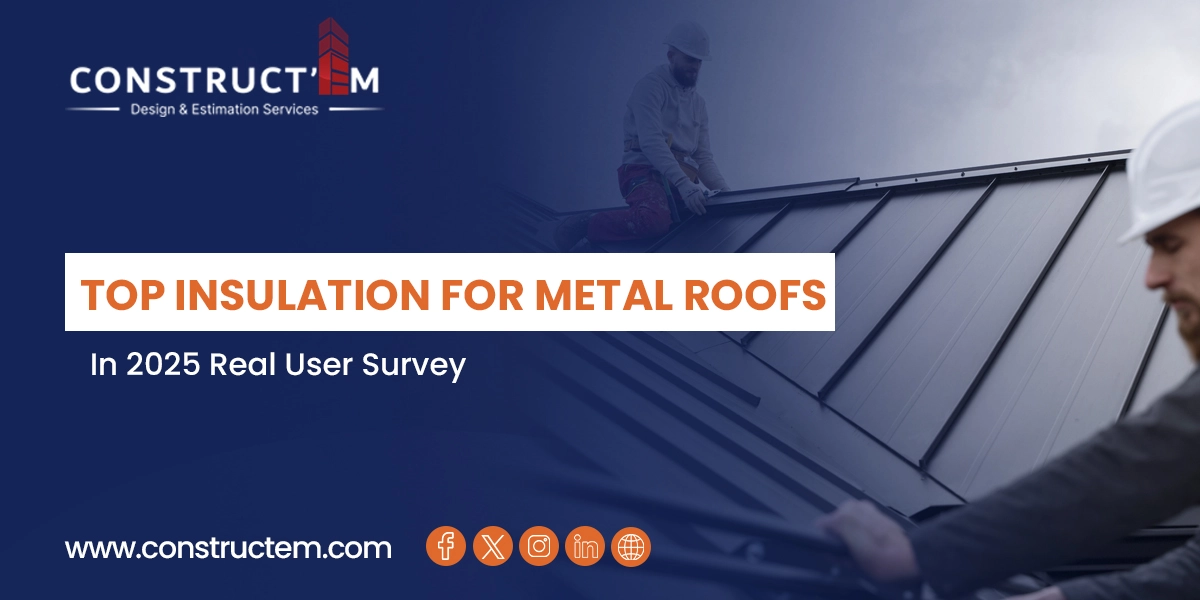
Many homeowners, contractors, and construction estimating consultants agree that proper insulation is key to comfort, energy savings, and protecting the structure over time.
In 2025, we surveyed dozens of metal roof owners and industry professionals to find out what insulation materials they use, how they install them, and which solutions give the best balance of cost, performance, and long-term satisfaction. This blog shares their experiences, tips, and insights — straight from real users.
Metal is a great conductor of heat, which means uninsulated roofs can get extremely hot in summer and very cold in winter. Survey participants shared stories of homes where insulation made a noticeable difference: reducing indoor temperature swings, keeping spaces quieter during rain or hail, and improving overall energy efficiency.
Several respondents mentioned that even a thin layer of insulation helped prevent condensation, which can lead to moisture problems or corrosion over time. One contractor noted, “Insulation isn’t just about comfort, it’s about protecting the roof and the investment you’ve made in it.”
Our survey highlighted four main types of insulation for metal roofs that people currently use:
Spray foam, particularly closed-cell, is popular for its ability to seal gaps and provide a strong thermal barrier. Many respondents praised it for reducing noise from rain and hail and maintaining a stable indoor temperature. While it’s more expensive upfront, users reported that energy savings and comfort improvements made it worth the investment.
Rigid foam panels are commonly used in new construction and re-roofing projects. They’re easy to install, moisture-resistant, and provide solid insulation. Survey participants said that rigid foam is a favorite for balancing performance and cost, especially when paired with proper sealing to prevent air leaks.
Fiberglass is the traditional, budget-friendly choice. It’s easy to install and widely available, making it popular for garages, sheds, and smaller projects. However, several respondents warned that it must be installed with care; without proper vapor barriers or sealing, its effectiveness drops significantly over time.
Reflective insulation works by bouncing heat away from the roof. Surveyed homeowners in hot climates reported that reflective barriers noticeably reduced attic heat and helped keep homes cooler in summer. Many users combine it with other insulation types for maximum effect.
Survey participants shared practical installation tips:
Many users stressed that installation quality is critical. One homeowner noted, “Even the best insulation won’t perform well if it isn’t installed correctly — gaps or poor sealing undo all the benefits.”
Before installing insulation, many homeowners consult construction estimating consultants, such as a What is Takeoff Specialist in construction, to calculate material requirements and ensure accurate planning.
While our survey focused on real user experience, many respondents also shared rough cost ranges for different insulation types (installed):
Higher upfront but excellent long-term performance.
Typically, more affordable than spray foam, but requires careful installation.
The most budget-friendly but has lower long-term effectiveness if not installed properly.
Works best when combined with bulk insulation.
Several users emphasized considering lifetime value over initial cost. Spray foam users, for example, noted that energy savings often offset the higher initial price within a few years.
Our survey also addressed frequently asked questions:
One user shared, “After adding closed-cell foam under my metal roof, my summer cooling costs dropped by about 15%, and the roof feels quieter during storms. It’s a small investment for a big difference.”
Metal roofs are durable and stylish, but they require the right insulation to maximize comfort and efficiency. Based on our 2025 survey:
Whether you’re a homeowner, contractor, or consulting professional, considering proper insulation under a metal roof is essential. Not only does it improve comfort and reduce energy bills, but it also helps protect the roof structure and ensures long-term value.
Real users in 2025 consistently reported that the right insulation choice made a noticeable difference, making it one of the smartest upgrades for any metal roof. If you’re unsure which insulation option is best for your metal roof, consulting experts like Constructem can help you make the right choice based on your climate, roof type, and budget.
Install foam boards, fiberglass, or reflective insulation beneath the metal panels and ensure proper ventilation to prevent moisture buildup.
Fiberglass is budget-friendly; foam boards cost more but perform better; and spray foam is pricier but offers excellent energy efficiency.
Yes, metal roofs can go over plywood, but adding underlayment or insulation improves energy efficiency and protects against condensation.
Insulating a metal roof enhances energy efficiency, reduces heat transfer, and minimizes moisture issues inside the building.
Some insurers see metal roofs as at risk for hail or storm damage, though high-quality metal roofs can sometimes lower premiums.
Yes, an air gap or ventilation layer helps prevent condensation, reduces heat buildup, and extends roof life.
Common types include fiberglass batts, spray foam, rigid foam boards, and radiant barriers, each offering different thermal and moisture benefits.


Social Links
© Construct'EM - 2026. All rights reserved.