

The key to a profitable 2026 isn’t just winning more bids but winning the right ones. Relying on gut feelings or outdated spreadsheets is risky when material costs are shifting. Recent data from the U.S. Bureau of Labor Statistics shows that while some supply chains have stabilized, specialized labor and high-performance components still see unpredictable price hikes.
Finding the best software for residential construction estimating is about protecting your margins. Consequently, it moves you from manual guesses to data-driven bidding, ensuring your overhead is covered before the first nail is driven. Let’s dive into the tools that help you scale without the financial guesswork.
Speed and precision are the only ways to survive the 2026 bidding climate. The construction software market is expected to reach $2.33 billion by late 2026 as builders ditch manual errors to protect their 5-10% profit margins. Therefore, if you aren’t using a digital tool, you are likely spending 50% more time on every bid than your competitors, which means you’re seeing fewer opportunities and losing easier wins.
The ideal software should act as a bridge between your blueprints and your bank account.Key features must include:
Buildertrend remains the heavyweight champion for residential home builders. It’s a full-scale project management suite that happens to have one of the most intuitive estimating modules on the market. In 2026, it focused heavily on financial forecasting, helping builders predict cash flow gaps months in advance.
Let our expert estimators deliver fast, accurate bids for you.
Get up to 30% Off your first quote
Perfect for custom home builders and large-scale remodelers, CoConstruct shines in the selection phase. Especially when a client picks a specific tile or fixture, the estimate updates in real-time, preventing the sticker shock that often kills high-end residential deals.
If your main pain point is the takeoff process, PlanSwift is your solution. It is a dedicated measurement tool that allows you to point and click through a set of plans. It’s famous for its assembly feature, where you can calculate the total cost of a wall stud, insulation, and paint with a single click.
STACK is the leader in cloud-based pre-construction. As a fully web-based platform that does not require high-performance hardware. Its 2026 AI updates now allow for automated symbol recognition, counting every electrical outlet or plumbing fixture on a 50-page set of plans in seconds.
ProEst is built for construction firms that need high-level rigor. It offers a centralized database that ensures every estimator in your company is using the same labor rates and material costs, eliminating the inconsistency that often plagues growing teams.
RSMeans is widely recognized as a leading cost database in the construction industry. In 2026, its data is more critical than ever for identifying localized labor shortages that might drive your project costs up unexpectedly.
This is the fastest tool for generating estimates, especially for remodeling projects. Designed specifically for remodelers, Clear Estimates comes with a pre-loaded library of over 10,000 line items. You can often walk through a home with a tablet and hand the homeowner a professional quote before you leave the driveway.
Sage is the choice for builders handling multi-family residential complexes. It is a power user tool that handles massive data sets without lagging. If your projects involve complex structural engineering and high-volume procurement, Sage provides the necessary depth.
Buildxact is incredibly popular with small-to-mid-sized contractors because it is simple to learn. It covers the bid-to-build cycle, meaning your estimate easily converts into a schedule and then into purchase orders, saving hours of data re-entry.
If your residential work involves insurance restoration, Xactimate is mandatory. It is the platform used by most insurance adjusters. Using it ensures your bids are in the same language as the carrier, leading to faster approvals and fewer payment disputes.
| Software | Primary Strength | Ideal User | Mobile Access? |
| Buildertrend | All-in-one Management | Home Builders | Yes (App) |
| PlanSwift | Fast Digital Takeoffs | Trade Contractors | Desktop Only |
| Clear Estimates | Speed / Remodeling | Handymen/Remodelers | Web-based |
| STACK | Cloud Collaboration | General Contractors | Yes (Web) |
| Buildxact | End-to-end Workflow | Residential Pros | Yes (Web) |
Avoid selecting overly complex software if your project requirements are relatively simple. If you are a small remodeler, a complex tool like Sage will only frustrate you. Look for software that offers a 14-day trial. Test it by running a previous project through it; if the numbers match and the process was faster, you’ve found a winner.
The AI in construction market is growing at a staggering 32.8% CAGR, expected to hit $3.02 billion this year. In 2026, AI isn’t just a buzzword but utility. It now handles Assisted Risk Detection, flagging anomalies where a design might lead to a budget overrun. These tools can compare your current bid against thousands of historical data points to tell you if your labor hours are too low for the scope.
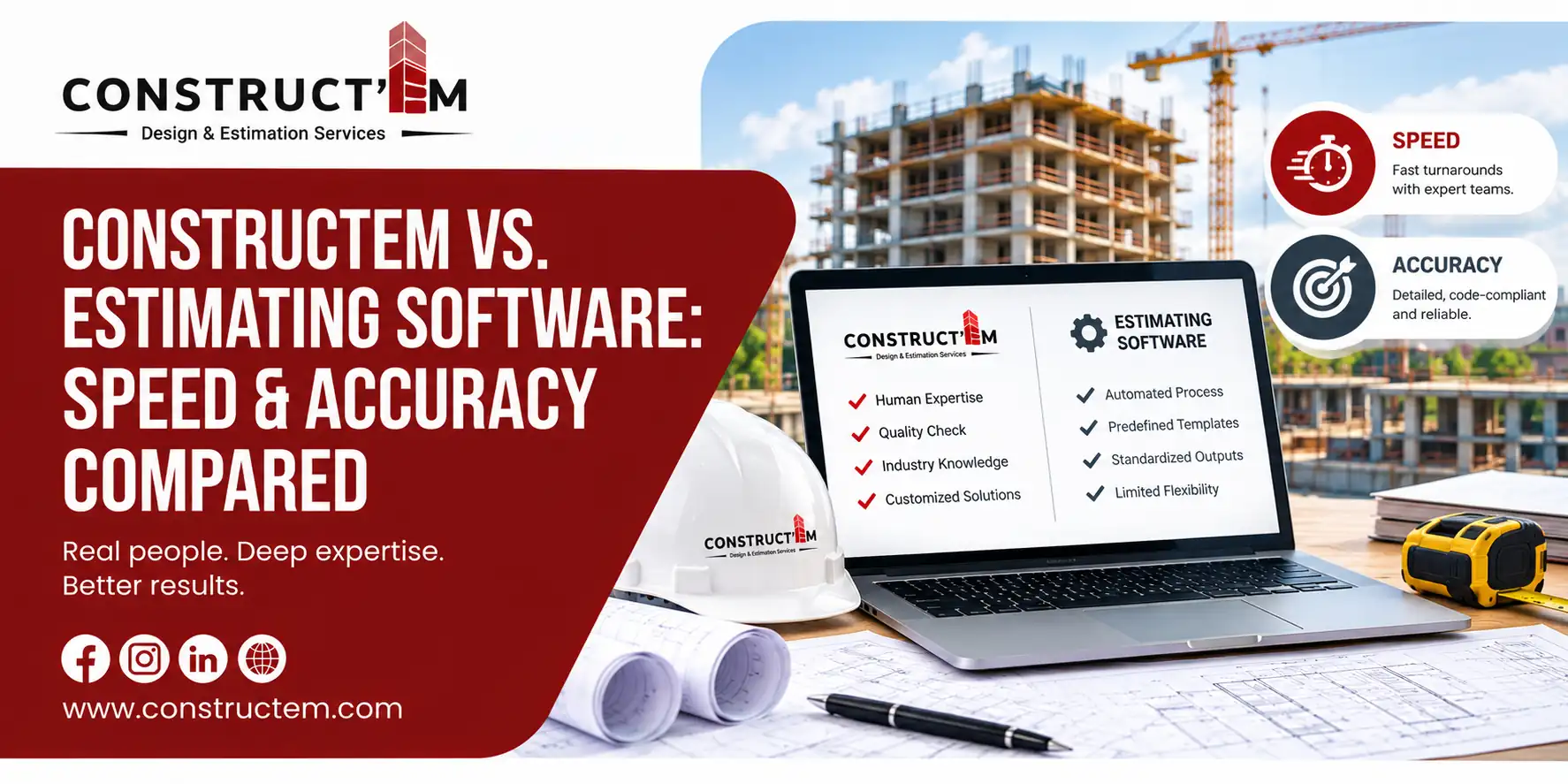
Manual estimating relies on memory, and human memory is flawed. A single misplaced decimal can turn a profitable project into a massive liability. Software standardizes your logic, ensuring that your 10th bid of the week is just as accurate as the first.
| Factor | Manual Estimating | Software Estimating |
| Speed | 4-8 hours per bid | 1-2 hours per bid |
| Accuracy | Prone to forgotten items | Uses checklists/assemblies |
| Scalability | Limited by personal hours | Can handle 10x the volume |
| Data | Static spreadsheets | Real-time price feeds |
While desktop software offers deep power, the cloud is the future of residential work. Cloud tools like STACK or Buildxact allow you to update an estimate on your phone while standing in a half-finished kitchen. This single source of truth prevents the nightmare of a project manager working from an outdated version of an Excel sheet.
The most frequent error is neglecting the initial setup. Software is a tool, not a magic wand. If you don’t take the time to input your specific crew’s labor rates or your local supplier’s discounts, your estimates will be consistently off. Inaccurate input data will lead to unreliable estimates.
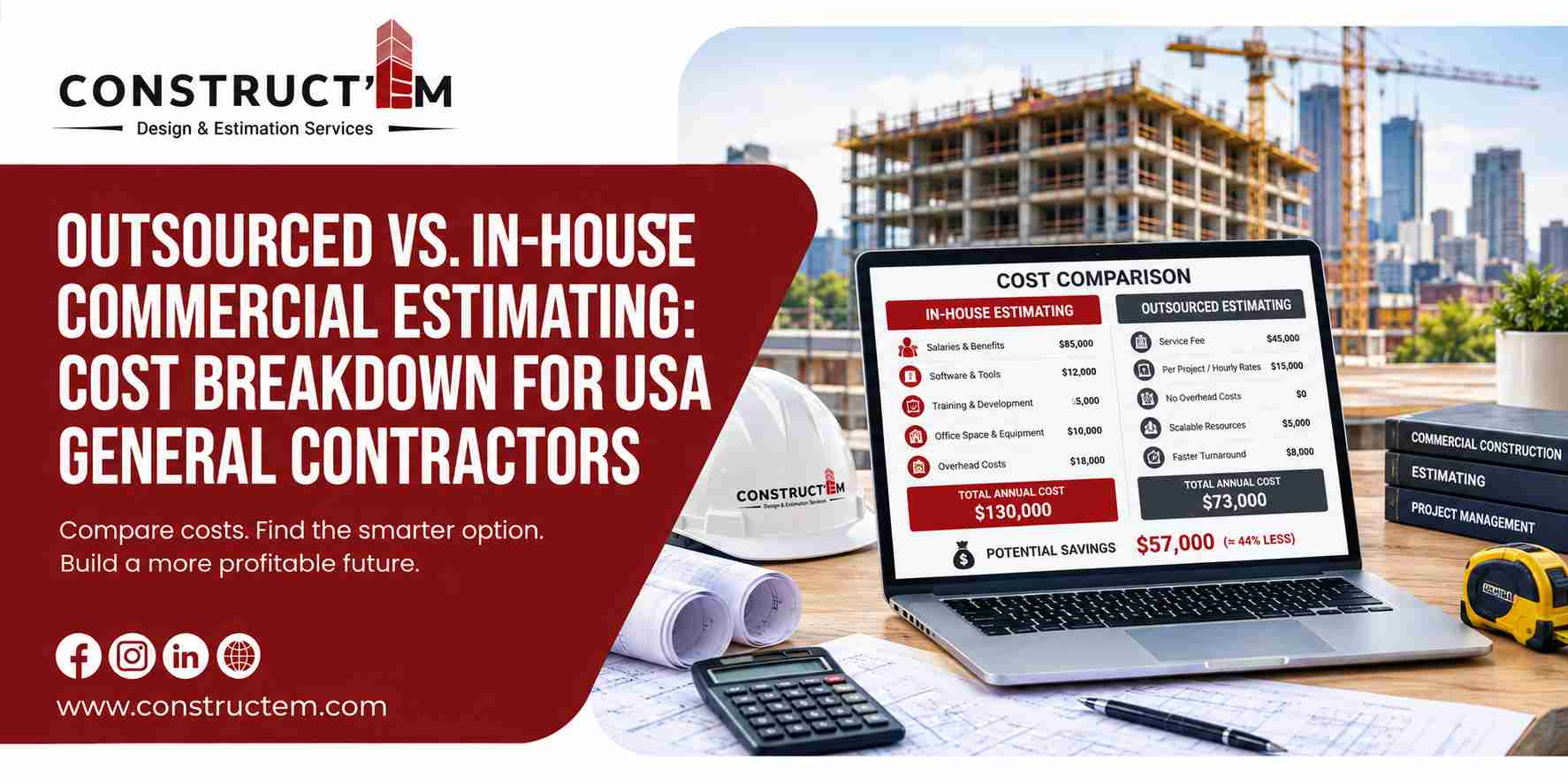
Software is powerful, but it doesn’t replace expertise. For high-stakes bids or projects with massive complexity, utilizing project cost estimation services is a strategic move. Outsourcing to experts allows you to bid on more work without increasing your overhead. By leveraging construction budgeting services, you ensure that your financial planning is handled by specialists who understand the nuances of the 2026 market better than any algorithm.
Choosing the best software for residential construction estimating is about reclaiming your time and protecting your profit. Whether you are a solo remodeler or a large-scale home builder, the transition to digital is the only way to remain relevant. At Constructem, we provide the technical expertise and support to ensure your bids are always bulletproof. Contact us to stay updated on the latest construction tech and estimating strategies.
Most free tools are basic calculators or trial versions of paid software. While you can find open-source spreadsheets, they lack the real-time cost data and digital takeoff features necessary for professional accuracy in 2026.
Buildertrend CoConstruct and Buildxact serve as the main construction management tools for professional home builders. These platforms integrate estimating with scheduling and client communication so they create a complete system which handles all stages of residential construction projects.
The average construction cost for a 2000 square foot house in 2026 ranges from $300000 to $600000 because different regions and finishing options affect building expenses. Local labor costs and material supply determine this value which can change in response to regional market conditions.
The main costs for construction projects in luxury residential buildings come from the structural system which includes the framing and building components that create the structural envelope which includes both the roof and the windows.
Standard online calculators are only meant for ballpark figures and often have a 20-30% margin of error. For a binding contract, you must perform a detailed takeoff using home construction estimating software or professional services.
Currently, Togal.AI and STACK are the leaders in AI-driven estimating. They specialize in automated takeoff, which uses machine learning to identify and quantify building materials directly from digital blueprints with incredible speed.
SketchUp offers a SketchUp Free version for personal, non-commercial use that runs in a web browser. For professional estimating and construction documentation in 2026, you will need the Pro or Studio subscription.
The four types are:
Evaluate your workflow. If you need speed for small jobs, choose Clear Estimates. If you need to manage an entire crew and client selections, Buildertrend is better. Always prioritize tools that offer local cost data integration.
A Class 1 estimate is a definitive estimate used for final bidding. It is based on 100% completed project documents and typically has an accuracy range of -5% to +10%, making it the gold standard for signed contracts.

Social Links
days day
hours hour
minutes minute
seconds second
Lock in Flat 30% off before your quote reservation expires.
Precision material takeoffs & cost estimates delivered fast for USA Contractors.