

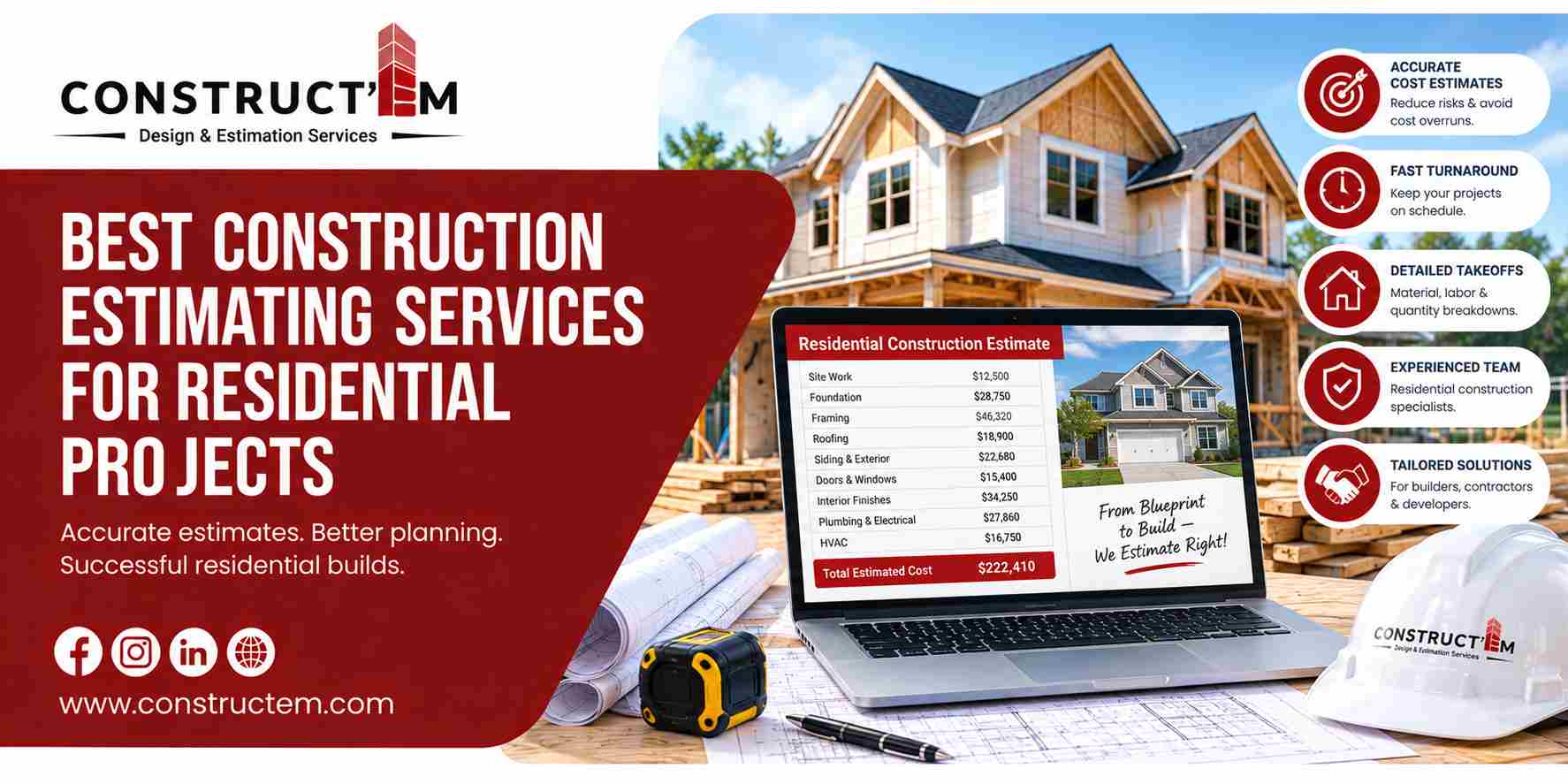
A Home Construction Estimator delivers a data-driven forecast of total construction costs. As a result, it improves budget accuracy and prevents overruns. Moreover, they analyze material costs, labor rates, and site conditions to transform guesswork into a precise roadmap. This level of clarity is vital because construction inflation and supply chain shifts in 2026 make traditional figures dangerous for your wallet. Let us break down the estimation process further so you can improve investment returns and avoid costly overruns.
Building a home today is significantly more complex than it was just a few years ago. As a result, volatile material prices mean that a quote from last month might be outdated today. A professional ensures your project remains viable from groundbreaking to the final inspection. Otherwise, it might result in running out of funds when the house is only 70% complete, without this expert oversight.
In 2026, the construction industry faces unique challenges, including a shortage of skilled tradespeople and fluctuating costs for high-efficiency components. A home construction estimator tracks these variables in real-time. They provide a buffer against uncertainty by applying historical data and current market trends to your specific blueprints. This level of preparation transforms a stressful build into a controlled process, allowing you to focus on design instead of financial pressure.
The journey from a blueprint to a final budget is a meticulous one. Here is how professional construction estimators handle the task:
Expert building estimation services provide a massive ROI by eliminating waste and optimizing resources. In many cases, the savings generated by an estimator are ten times the cost of their fee. Here is how they protect your bottom line:
| Feature | Project Without Estimator | Project With Home Construction Estimator |
| Budget Accuracy | 60–70% (Frequent overruns) | 95–98% (Strict control) |
| Material Waste | High (15–20% surplus) | Minimal (Under 5-10% waste) |
| Contractor Disputes | High due to vague allowances | Low due to defined scopes |
| Timeline Delay | Common (Funding gaps) | Rare (Pre-allocated funds) |
| ROI | Negative (Loss on waste) | High (Savings exceed fees) |
Effective construction cost planning isn’t a one-time event; it is a continuous strategy. It involves setting milestones and tracking every dollar spent against the initial estimate. This discipline allows you to make informed trade-offs. For example, you might choose mid-range flooring to afford a high-efficiency HVAC system without crashing your total budget.
What Happens If You Don’t Use a Construction Estimator in Your Project? This mistake often leads to project delays, legal complications, and incomplete builds. Without a structured plan, you become reactive rather than proactive in decision-making. You end up making expensive decisions under pressure when the contractor tells you they need more money immediately. Construction cost planning puts you back in the driver’s seat.
In 2026, professional construction estimators rely on advanced software to ensure high accuracy. The days of a yellow legal pad and a calculator are over. Modern tools include the following:
Smart material choices can slash your exterior and interior costs without sacrificing aesthetics. Experts currently recommend these for 2026 builds:
According to data from the National Association of Home Builders (NAHB), the average cost per square foot for residential construction is currently around $150 to $250. This means a $300,000 budget is certainly viable for a 1,200 to 1,500-square-foot home, provided you have a strict home construction estimator managing the funds.
However, you must be realistic. This budget usually excludes the cost of land and major site developments like septic systems or long driveways. In markets like California or Florida, $300,000 may only cover a high-end ADU (Accessory Dwelling Unit). To make a $300,000 budget work, you must prioritize “needs” over “wants” during the initial construction cost planning phase.
The foundation and framing are the most expensive structural components. According to an industry report, framing typically accounts around 15-20% of the total build cost. This is followed closely by exterior finishes and mechanical systems (HVAC, plumbing, and electrical).
However, the room that costs the most is invariably the kitchen. Between high-end appliances, stone countertops, and custom cabinetry, it is easy to spend $50,000 on a high-end kitchen. An estimator helps you decide where to splurge and where to save, ensuring that your expensive kitchen doesn’t leave you with a gravel driveway because you ran out of money.
Hiring an estimator is a smart move, but many builders still fall into avoidable traps. Avoiding these common pitfalls keeps your construction cost planning on track and protects your wallet.
Mastering your build starts with data, not dreams. By utilizing a home construction estimator, you gain the upper hand in negotiations and ensure your vision reaches completion. Constructem simplifies this journey by providing the precision you need to build with confidence. We focus on tailored, professional advice that helps you navigate the complex world of 2026 construction. For more tips on saving money and professional insights, you can visit our website and reach out to our team.
Your home construction costs will decrease when you design your house with basic features, select common material sizes, and bring in an expert who can create your building budget. The project cost control method requires all work to be done according to the established timeline because this approach stops teams from incurring extra work costs.
The budget of $300,000 usually covers the expenses of a 1,500 square foot house located in areas with moderate housing prices. The final cost depends on the specific land value and the required permit fees which differ between various states. The efficient budget allocation needs your active partnership with an estimator for proper budget handling.
Framing and the foundation are the most expensive structural components, often making up over 25% of the total cost. Inside the home, the kitchen represents the highest cost per square foot due to cabinetry, plumbing, and expensive appliances.
Home construction costs for building a 2,000 square foot house will vary between $350,000 and $550,000 according to current market rates. Your selection of finishing products together with the local workforce expenses will determine the final costs. A Home Construction Estimator can provide a more precise figure based on your specific location.
It helps track material usage while preventing waste from excessive ordering. The system provides an accurate shopping list which ensures you pay only for necessary project materials. The team helps you discover value engineering solutions which enable you to replace costly materials with less expensive options.
A cost estimator is a specialist who calculates the total investment needed for a project. The professionals examine architectural plans to determine project expenses based on current industry rates for labor and materials. The team uses digital tools to obtain precise measurements while identifying all possible project risks.
Industry leaders include Stack, PlanSwift, and Bluebeam. These platforms allow for high-speed digital takeoffs and integrate with real-time material pricing databases. Many estimators also use specialized BIM software for 3D cost modeling.
Bamboo flooring and pre-cast concrete panels and reclaimed wood make up the popular cost effective materials options for construction projects. The materials provide strong performance and high-end appearance which costs less than traditional premium materials. The market demands engineered siding and luxury vinyl plank (LVP) because these products offer exceptional return on investment.
Stack, PlanSwift, and Bluebeam are leading tools in the industry. These platforms enable quick digital takeoffs and integrate with real-time material cost databases.Estimators use specialized BIM software to create 3D cost models for their projects.
Start with a thorough site analysis to avoid hidden ground issues like rock or high water tables. The first step requires you to set your material prices during the initial planning stage to protect against future inflation. The last step requires you to establish professional cost estimates for all contractor communication to prevent unnecessary financial conflicts.
Social Links
days day
hours hour
minutes minute
seconds second
Lock in Flat 30% off before your quote reservation expires.
Precision material takeoffs & cost estimates delivered fast for USA Contractors.